For many tank water heaters, an annual flush is a useful maintenance starting point. Your model’s manual, water quality and hot water use should determine the actual schedule. Tankless systems need a different service: descaling the heat exchanger according to the manufacturer’s instructions.
If your shower turns lukewarm halfway through or your water heater has started making a popping sound, it is worth looking beyond the temperature setting. Sediment can contribute to those problems, but it is not the only possible cause. This guide helps Riverside homeowners decide when routine maintenance makes sense and when a repair assessment should come first.
What Does a Water Heater Flush Actually Do?
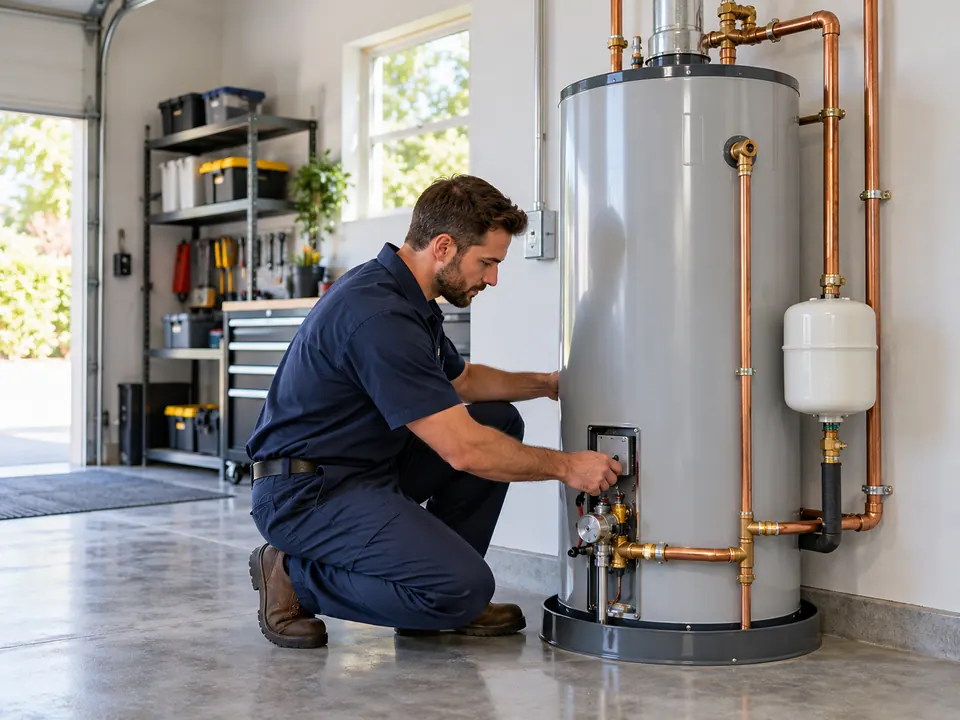
A tank water heater stores and heats water. Minerals and other particles can settle at the bottom over time. Flushing moves water through the tank to carry out loose sediment. It can help maintain normal operation, but it cannot repair a corroded tank, a failed heating element or a gas control problem.
Descaling a tankless unit is different. A technician circulates a manufacturer approved solution through the heat exchanger, then rinses the system. An ordinary tank flush and tankless descaling are not interchangeable services.
How Do You Choose the Right Maintenance Schedule?
The right maintenance schedule depends on your water heater’s type, condition, water quality and daily use. For many tank water heaters, an annual flush is a useful starting point for removing loose sediment. Tankless systems need a different service to remove mineral scale from the heat exchanger. If you are unsure which service your unit needs or when it was last maintained, Elite Plumbing Pros can assess it and help you choose an appropriate schedule.
- Check the manufacturer’s interval. Keep the model number and maintenance instructions together.
- Consider your water quality. Mineral content varies by supply and treatment. Scale around faucets is a reason to ask about testing, not proof that your heater needs a particular service interval.
- Consider demand. A busy household, rental or business may need a different plan from a lightly used home.
- Look at the service history. If the last flush date is unknown, have the unit assessed before draining it.
- Keep a record. Note the service date, findings and next recommended maintenance date.
Why Does This Matter for Riverside and Inland Empire Homes?
For homeowners in Riverside, Corona, Moreno Valley and the surrounding Inland Empire, the useful question is not whether every home has the same water. It is what your own heater, supply and usage are telling you. Moving into a home with an older heater or an unknown maintenance history is a good time to establish a baseline.
Before arranging a visit, take a photo of the heater’s model label and note any noise, leaks or loss of hot water. Tell the plumber whether you have a storage tank or a tankless unit. That information helps distinguish a maintenance appointment from a repair call.
Tank Flushing or Tankless Descaling: Which Do You Need?
| Question | Storage Tank Water Heater | Tankless Water Heater |
|---|---|---|
| What collects inside? | Loose sediment can settle at the bottom of the tank. | Mineral scale can form inside the heat exchanger. |
| What is the maintenance approach? | Drain and flush according to the model’s instructions and condition. | Descale and rinse with the approved procedure and solution. |
| What sets the schedule? | The manual, water quality, use and service history. | The manual, water quality, use and any maintenance alerts. |
| What else may need attention? | Anode rod, connections, heating components and safety devices. | Filters, isolation valves and model specific components. |
| When is a flush not enough? | A leaking tank or failed component needs a separate assessment. | Persistent error codes or failed components need diagnosis. |
A Homeowner Checklist: Signs to Discuss With a Plumber
You do not need to open a valve or remove a cover to gather useful information. Check what you can safely see and hear.
- New popping or rumbling sounds. Sediment may be involved, but noise alone does not confirm the cause.
- Less hot water than usual. Note whether the change was sudden or gradual and whether it affects every fixture.
- Hot water that looks discolored. Tell the plumber whether cold water looks normal too. Corrosion and supply issues may need investigation.
- Moisture near the heater. A connection leak and a tank leak require different responses.
- A tankless maintenance alert. Record the exact code rather than repeatedly resetting it.
- No known maintenance date. An inspection can help establish a sensible next step.
Do not wait for routine flushing if there is an active leak or a safety concern. If you smell gas, leave the area, avoid switches and flames, and contact your gas utility or emergency services from a safe location. Never cap a temperature and pressure relief discharge pipe.
Should You Flush an Older Heater That Has Never Been Serviced?
Have its condition checked first. A neglected unit may have heavy sediment, a deteriorated drain valve or corrosion that changes what maintenance is appropriate. A flush is not automatically the right answer simply because the heater is old.
Ask the plumber to explain whether maintenance, a targeted repair or replacement is the most sensible option and why. Avoid treating flushing as a guaranteed cure for noise, poor performance or leaks.
What Should You Expect From a Professional Visit?
The exact work depends on the heater and the service you agree to. A responsible maintenance discussion should cover these points before the job begins:
- Identify the unit and the concern. Confirm the model, fuel type, symptoms and maintenance history.
- Assess whether flushing is appropriate. Look for visible leaks, corrosion and access limitations.
- Agree on the scope and quote. Clarify whether the visit covers tank flushing, tankless descaling or a separate inspection or repair.
- Follow the manufacturer’s procedure. Safe shutdown, cooling, draining and refill steps vary by unit. An electric heater must not be energized with an empty tank.
- Check operation and explain findings. Discuss any remaining concern and the next recommended service interval.
A Quick Checklist Before Your Appointment
- Have the model number or a clear label photo ready.
- Write down the symptoms and when they started.
- Share the last service date if you know it.
- Clear a safe path to the heater without moving gas lines, wiring or plumbing.
- Mention stairs, tight access or a heater installed in a closet.
- Ask what is included in the quote before approving work.
Frequently Asked Questions About Water Heater Flushing
How Often Should I Flush My Water Heater in Riverside?
Annual maintenance is a useful starting point for many tank models, but follow the instructions for your specific heater. Water quality, usage and the unit’s condition may justify a different schedule. If you do not know its service history, arrange an assessment before draining it.
Does Flushing a Water Heater Fix Popping Noises?
It may help if loose sediment is the cause. Popping, rumbling and other noises can also have different causes, so a persistent or new sound should be evaluated rather than assumed to be a routine flushing issue.
Can a Flush Repair a Leaking Water Heater?
No. A flush does not repair a leaking tank. A plumber needs to identify whether the water is coming from a connection, valve or the tank itself before recommending repair or replacement.
Do Tankless Water Heaters Need to Be Flushed Too?
Tankless units may need descaling to remove mineral buildup from the heat exchanger. This uses a model specific procedure and is different from draining and flushing a storage tank. Follow the manufacturer’s maintenance instructions.
How Much Does Water Heater Flushing Cost?
Ask for a quote based on your unit, access and service scope. Tank flushing, tankless descaling and repair work are different jobs. Confirm what is included before approving service rather than relying on a generic online price.
Who Can I Call for Water Heater Maintenance in Riverside?
Elite Plumbing Pros serves Riverside and the Inland Empire with plumbing and water heater services. Call (951) 992-6227 or use Get A Quote to discuss your unit and arrange service. Elite Plumbing Pros is licensed in California, License #1120164, and Open 24/7. Routine maintenance appointments depend on scheduling availability.
Should I Call Right Away If I Have No Hot Water?
If hot water suddenly stops, ask for a diagnostic visit rather than assuming a flush will solve it. Describe any error code, leak or unusual noise. For a gas smell or another immediate hazard, leave the area and contact your utility or emergency services from a safe location first.
Ready to Give Your Water Heater Some Attention?
If you are unsure whether your heater needs flushing, descaling or a repair, start with a conversation. Explore water heater installation, replacement and repair, or learn about tankless water heater services.
Call (951) 992-6227 or use the Get A Quote form on this page. Tell us your heater type, symptoms and location so the Elite Plumbing Pros team can help you choose the next step.